Chocolate Bar Font: A Vibrant 3D Color Typeface for Expressive Visual Storytelling
Typography is rarely just about legibility—it’s about tone, energy, and emotional resonance. In the expanding landscape of digital design tools and expressive type technologies, Chocolate Bar Font stands out not as a subtle accent, but as a bold, joyful statement. Designed with playful confidence and built for visual impact, this font transforms ordinary text into layered, dimensional experiences—especially where celebration, flavor, and fun converge.
What Makes Chocolate Bar Font Distinctly Modern?
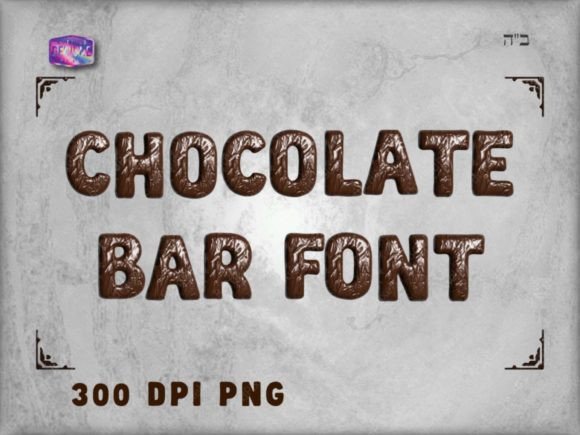
At its core, Chocolate Bar Font is a color font—a category enabled by OpenType-SVG technology that embeds rich, multi-hued glyphs directly into the font file. Unlike traditional monochrome fonts that rely on software-layered effects (like gradients or shadows), Chocolate Bar Font renders its full 3D color appearance natively in compatible applications. Each character arrives pre-styled: glossy highlights, soft shadows, vibrant candy-inspired palettes, and subtle depth cues—all baked into the glyph data.
This isn’t just aesthetic flair—it’s functional precision. The 3D illusion emerges without manual layering, blending modes, or rasterized effects, preserving scalability and editability. When you type “Birthday,” “Cupcake,” or “Yum!”, the result is instantly textured, dimensional, and cohesive—no post-processing required.
Where Chocolate Bar Font Excels: Real-World Applications
Because of its inherent warmth and tactile personality, Chocolate Bar Font thrives in contexts where authenticity, approachability, and sensory appeal matter most. Below are several high-impact use cases—each grounded in how designers, educators, small business owners, and hobbyists actually deploy it:
- Food Branding & Packaging: Local bakeries, artisanal chocolatiers, and dessert subscription services use Chocolate Bar Font to craft labels, menu boards, and social media banners that feel handmade yet professionally polished. Its playful weight and color fidelity translate well to Instagram stories and printed kraft paper bags alike.
- Event Design & Party Invitations: Wedding planners and DIY hosts integrate it into digital invites, printable cupcake toppers, and photo booth overlays. The font’s built-in dimensionality adds instant visual interest to flat layouts—no need for extra shadow layers or 3D modeling plugins.
- Educational Materials for Young Learners: Early childhood educators use it in classroom posters, flashcards, and interactive PDFs. Letters appear friendly and memorable—supporting letter recognition while reducing cognitive load through intuitive visual cues (e.g., a rounded “O” with a glossy center mimics a chocolate disc).
- Social Media Content Creation: Creators building food-themed Reels, TikTok recipes, or YouTube thumbnails apply Chocolate Bar Font to short headlines (“Quick & Chewy!” or “No-Bake Magic”). Its high contrast and saturated tones ensure readability even at small sizes on mobile screens.
- Print-on-Demand Product Mockups: Artists selling themed stickers, mugs, or tote bags preview designs more accurately when using the native color font—avoiding discrepancies between screen and final print output caused by simulated effects.
Compatibility: Knowing Where—and Where Not—to Use It
Understanding technical boundaries is essential for efficient workflow integration. Chocolate Bar Font ships as an OpenType-SVG (OTF-SVG) file—a format supported natively in Adobe Photoshop (CC 2017+), Illustrator (CC 2018+), Silhouette Studio (v5.0+), and Inkscape (v1.1+). In these environments, color and 3D styling render automatically upon typing.
However, compatibility isn’t universal. Crucially, the OTF and TTF files included with this product are not compatible with Cricut Design Space. This limitation stems from Cricut’s current handling of SVG-based color fonts: it reads only the outline geometry—not embedded color instructions—so glyphs appear as flat, unstyled silhouettes. For Cricut users seeking similar aesthetics, workarounds include exporting text as vector art from Illustrator or using compatible monochrome alternatives for cut-file preparation.
Other considerations include:
- Web Use: While OpenType-SVG fonts can be embedded via
@font-face, browser support remains limited (primarily Safari and newer versions of Chrome/Edge). For responsive web projects, fallback strategies—such as pairing a lightweight web font with CSS-generated highlights—are recommended. - PDF Export: When saving documents from Illustrator or InDesign, embedding the font preserves appearance—but recipients must have the font installed to view colors correctly. For universal sharing, export as PDF/X-4 or flatten to outlines before distribution.
- Accessibility Notes: As with any highly stylized typeface, Chocolate Bar Font should not be used for body text or primary navigation. Its decorative nature suits headlines and accents best. Always pair it with a clear, accessible sans-serif for supporting content.
Workflow Integration: From Installation to Output
Getting started requires minimal setup—but attention to detail pays off. After downloading the package, install the OTF-SVG file (not the standard OTF/TTF variants) via your operating system’s font manager. Then verify support in your preferred application:
- In Photoshop, select the font from the Character panel—no extra steps needed. Adjust size, tracking, or baseline shift freely; color and depth remain intact.
- In Illustrator, paste or type text, then confirm the font appears in the Control panel with a small “SVG” badge. Edit individual letters via the Glyphs panel without losing styling.
- In Silhouette Studio, enable “Use System Fonts” in Preferences, restart the app, then select Chocolate Bar Font from the Text Style dropdown. It will appear in cut previews with accurate color representation.
- In Inkscape, go to Edit > Preferences > Text > Default font, choose Chocolate Bar Font, and type directly. For older versions, use Text > Unicode Font to activate SVG rendering.
Pro tip: Because each glyph contains multiple color layers, avoid applying additional fill or stroke effects unless intentionally deconstructing the design. The font’s strength lies in its self-contained expressiveness—not additive manipulation.
Design Philosophy in Practice: Why Color Fonts Matter Now
Chocolate Bar Font reflects a broader evolution in typographic capability—one that moves beyond static outlines toward dynamic, context-aware expression. Historically, designers simulated dimension through labor-intensive techniques: duplicating layers, applying Gaussian blur for shadows, manually painting highlights. Today, color fonts encode those decisions directly into the type architecture.
This shift supports faster iteration, consistent branding across platforms, and greater creative fidelity—especially valuable for non-designers managing their own marketing assets. A café owner updating a weekend special board in Canva (via compatible plugin) or a teacher generating a classroom reward certificate in Google Slides (with SVG-enabled add-ons) gains professional-grade results without mastering advanced software.
Moreover, the rise of tactile, sensory-driven communication—particularly in food, wellness, and lifestyle spaces—makes fonts like Chocolate Bar increasingly relevant. Consumers respond to visual cues that evoke taste, texture, and temperature. A glossy “Milkshake” headline doesn’t just say refreshment—it implies coolness, creaminess, and indulgence—before a single word is read.
Choosing Responsibly: When to Reach for Chocolate Bar Font
Its charm is undeniable—but effectiveness depends on intention. Consider Chocolate Bar Font when:
- You’re designing for momentary impact, not sustained reading (e.g., signage, social posts, packaging front panels).
- Your brand voice embraces playfulness, nostalgia, or comfort—think ice cream shops, kids’ cooking classes, or retro dessert blogs.
- You need cross-platform consistency in environments where OpenType-SVG is supported, reducing version drift between mockup and final output.
- You’re collaborating with teams who benefit from reduced reliance on layered assets—streamlining handoffs between designers, marketers, and printers.
Avoid it when:
- Legibility under time constraints is critical (e.g., emergency signage, accessibility-first interfaces).
- You’re targeting platforms with no SVG font support (e.g., older email clients, basic CMS editors).
- Your project demands strict typographic hierarchy with multiple weights or widths—Chocolate Bar Font is intentionally singular in structure and tone.
Looking Ahead: Beyond the Bar
As variable fonts, color fonts, and 3D typography mature, tools like Chocolate Bar Font point toward a future where type behaves more like material than markup. Imagine fonts that adapt hue based on ambient light detection, or adjust gloss intensity depending on device orientation. While today’s implementations focus on static vibrancy, the underlying framework enables richer interactivity tomorrow.
For now, Chocolate Bar Font delivers something equally valuable: clarity of purpose. It doesn’t try to be everything. It excels where joy, flavor, and immediacy intersect—and does so with technical integrity and thoughtful design discipline. Whether you're sketching a birthday banner at midnight or refining a client’s confectionery identity, it offers confidence—not just in appearance, but in execution.